Invasive plants are harmful because they disrupt ecosystems, outcompeting native species for resources such as sunlight, water, and soil nutrients. This imbalance can lead to the decline or extinction of native plants, which in turn impacts the animals and insects that rely on them for food and habitat. Invasive species can also alter soil chemistry, water availability, and fire cycles, further degrading ecosystems. Additionally, they often spread rapidly and are difficult to control, leading to costly management efforts. By reducing biodiversity and ecosystem health, invasive plants threaten both natural environments and the services they provide to humans. If you’re visiting our gardens, keep an eye out for the Controlling WNC Invasive Plant Species Display near the playground.
When you are getting started in a new garden, a good thing to do is identify the invasive plants on the site, research ways to rid your gardens of these damaging plants, and take steps to control these non-native pests. This section of our website might help with the identification of invasives on your site. For ways to control these plants, please contact us or the Agricultural Extension Service.
Here’s an invasive that can match the growth rate and perhaps even surpass Kudzu.
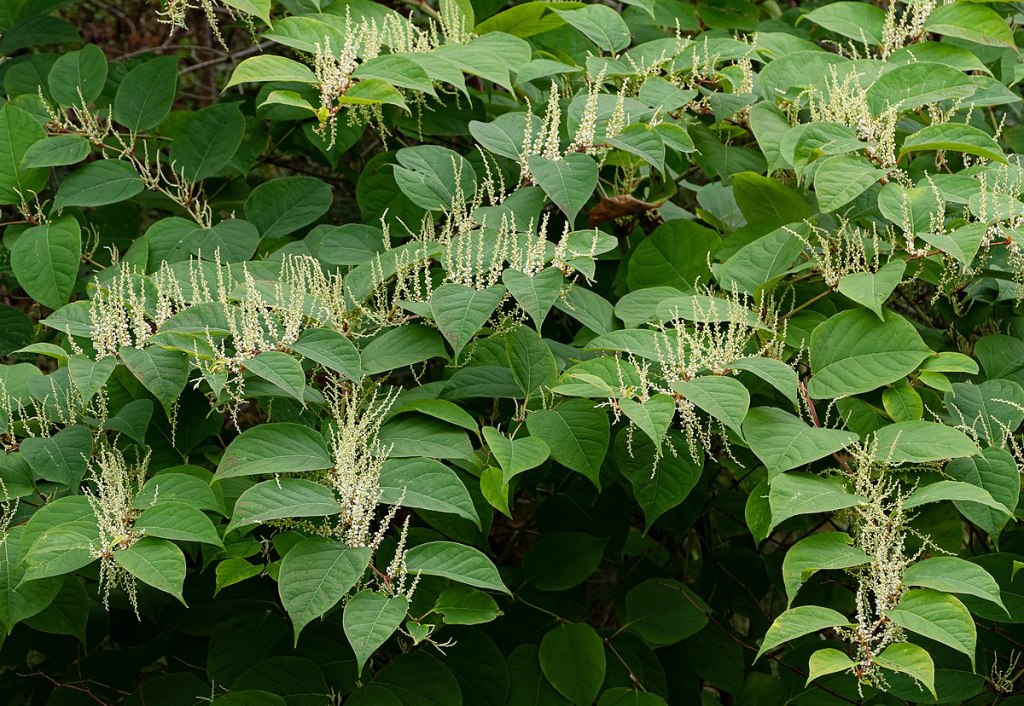
JAPANESE KNOTWEED, Polygonum cuspidatum
It appears quite pretty when you notice it growing along the roads of Madison County. “Pretty” is certainly what the collector who brought it from Japan nearly 200 years ago must have thought. And growing probably isn’t the appropriate word…. perhaps taking over is a better description. This large shrub with drooping tassels of white flowers set off by purple-brown stems and shovel-shaped green leaves might seem the perfect plant to fill in the garden at the end of summer when many other flowers have gone to seed. But beware of first impressions!
Japanese Knotweed has been described as a thug, relentless and overwhelmingly aggressive and probably just as often by words not fit for print. It forms dense, bamboo-like clumps up to seven feet high and spreads rapidly, mostly through creeping underground stems (rhizomes) that can grow more than three feet a month. It is so vigorous it can cause pavement to heave and crack, after which it sends up new shoots through the cracks it has made. It can damage buildings in the same manner. A tiny piece of rhizome from Japanese Knotweed can produce a new plant in ten days and a tiny piece of rhizome can remain dormant in the soil for twenty years before waking up and giving birth to a mighty horde of new invaders.
If you have Japanese Knotweed get rid of it! Eradication requires steely determination, so call the Extension Office for advice. And if you love tassels of white flowers at the end of summer, raise your eyes to the native sourwood trees that are blooming at this time of year. They are not invasive and, by the beginning of fall, will set off their white flowers with bright red leaves.
Unfortunately, many exotic invasive plants are beautiful. That is one of the main reasons they were brought to this country. Bradford Pear (Pyrus calleryanna) has its own story about how it went from being non-invasive to invasive. Originally from China, the first Callery Pears brought to this country in the 1960’s were developed and introduced by the USDA as “the universal landscape tree.”
Considered unable to self-pollinate or produce fertile fruit, they were highly valued for their fast growth, rounded form and beautiful white flowers which appeared early in the spring. In subsequent years, they were planted by the thousands along the streets of suburban developments, in office parks and as specimen trees in front yards. At that time, the only problem seemed to be their tendency to split and break during heavy wind, rain and snow.
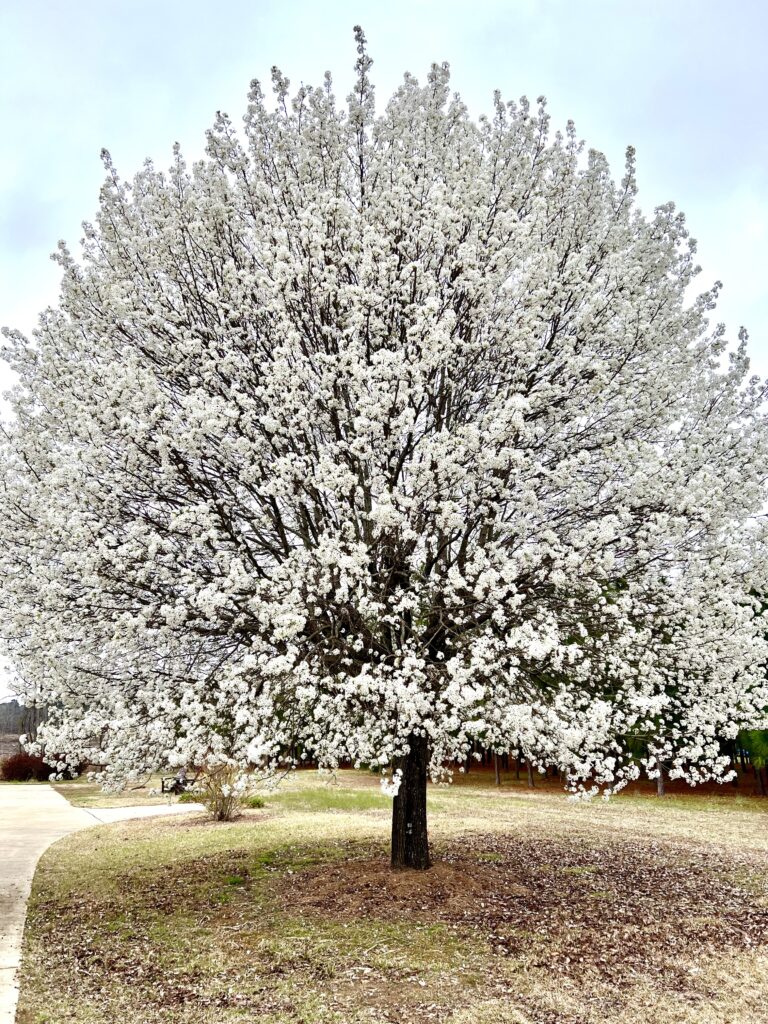
By the 1990’s, breeders had developed cultivars of Callery Pear that did cross pollinate. These were sold and planted with the same enthusiasm as the 1960 variety. The fruits (each containing up to ten seeds) of these new, fertile trees were eaten by birds and dispersed into nearby fields, parks and other open and disturbed areas, creating an invasive wild population of hybrid Callery Pears.
These new hybrids began to unbalance native plant communities. Their tendency to split and break resulted in an increase in power outages and damage to cars and homes. Because of these problems, many nurseries now refuse to sell them and some states are starting campaigns to stop their spread. If you already have Bradford Pears don’t cut them down. But if they break or die you might consider different trees as replacements. If you are longing for an early blooming tree with white flowers, consider planting Serviceberry or our native Dogwood, which not only has beautiful flowers but an abundance of red berries in the fall.
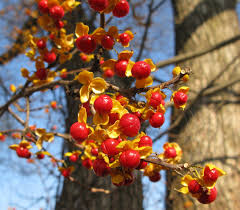
Fall is here and with it many lovely orange and red berries, tempting us to include them in holiday wreaths and arrangements. The bittersweets are probably the prettiest of Fall fruiting plants and lend themselves to wreath making because they are vines that can be twisted and twined.
In Madison County we have two bittersweets: Oriental bittersweet (Celastrus orbiculatis) and American bittersweet (Celastrus scandens). Oriental bittersweet is so invasive and such a menace that many towns in New England are making it illegal to grow or sell. Once established, it is a serial killer, rampaging through woodlands and hedgerows, climbing and strangling even large trees. It is very difficult to get rid of, requiring several years of pruning and herbicide use.
If you purchase a bittersweet vine from a nursery be sure it is American bittersweet, which is native to North America east of the Rocky Mountains and less invasive than its Asian cousin.
The easiest way to tell the difference between Oriental and American bittersweet is that American has orange berries located at the end of each stem. Oriental bittersweet has its berries in leaf axils along the length of the stem and the seed capsules are yellow. If you do decide to make a wreath with Oriental bittersweet, when the season has ended discard it with care. Be sure to place it in a plastic bag and put it in the trash. Don’t throw it into the woods or on a compost pile as the berries can germinate and produce new, invasive vines.
The Princess tree, also known as royal paulownia or empress tree, is a small to medium sized tree that may reach 30-60 feet in height. The bark is rough, gray-brown, and interlaced with shiny, smooth areas. Stems are olive-brown to dark brown, hairy and markedly flattened at the nodes (where stems and branches meet).
Conspicuous upright clusters of showy, pale violet, fragrant flowers open in the spring. The fruit is a dry brown capsule with four compartments that may contain several thousand tiny winged seeds. Capsules mature in autumn when they open to release the seeds and remain attached all winter, providing a handy identification aid.
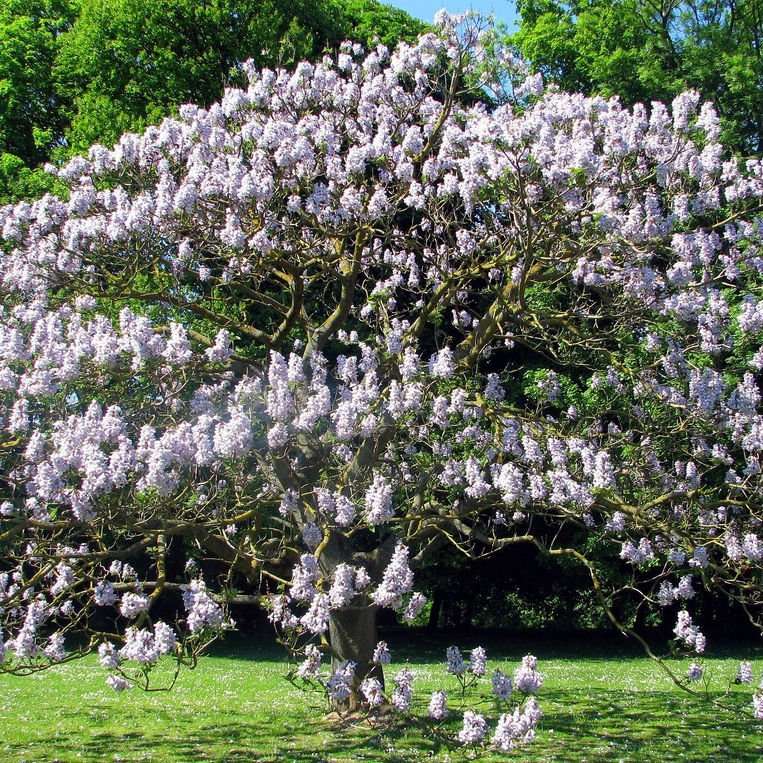
Princess tree was introduced into the U.S. as an ornamental and landscape tree around 1840. It was imported to Europe in the 1830’s by the Dutch East India Company and brought to North America a few years later. This tree has since become naturalized in the eastern U.S. Historical records describe its medicinal, ornamental, and timber uses as early as the third century B.C. It was cultivated centuries ago in Japan where its wood is still highly valued.
Princess tree can reproduce from seed or from root sprouts which can grow more than 15 feet in a single season. The root branches are shallow and horizontal without a strong taproot. Seed-forming pollen is fully developed before the onset of winter and the insect-pollinated flowers open in spring. A single tree is capable of producing an estimated twenty million seeds that are easily transported long distances by wind and water and may germinate shortly after reaching suitable soil. Seedlings grow quickly and flower in 8-10 years. Mature trees are structurally unsound and rarely live more than 70 years. Princess tree can be controlled using a variety of mechanical and chemical controls. Hand pulling may be effective for young seedlings. Plants should be pulled as soon as they are large enough to grasp. Seedlings are best pulled after a rain when the soil is loose. The entire root must be removed since broken fragments may resprout. Trees can be cut at ground level with power or manual saws. Cutting is most effective when trees have begun to flower to prevent seed production. Because Princess tree spreads by suckering, resprouts are common after cutting. Cutting should be considered an initial control measure that will require either repeated cutting of resprouts or an herbicidal treatment.
Large trees should be cut down with a chainsaw and the outer two inches of cut surface of stump treated with undiluted glyphosate concentrate (53.8% is preferable). Large saplings can be killed in a similar fashion, taking care to treat the entire cut surface. If seed capsules are present on cut limbs,, they should be collected, bagged and disposed of in heavy garbage bag so they do not spread.
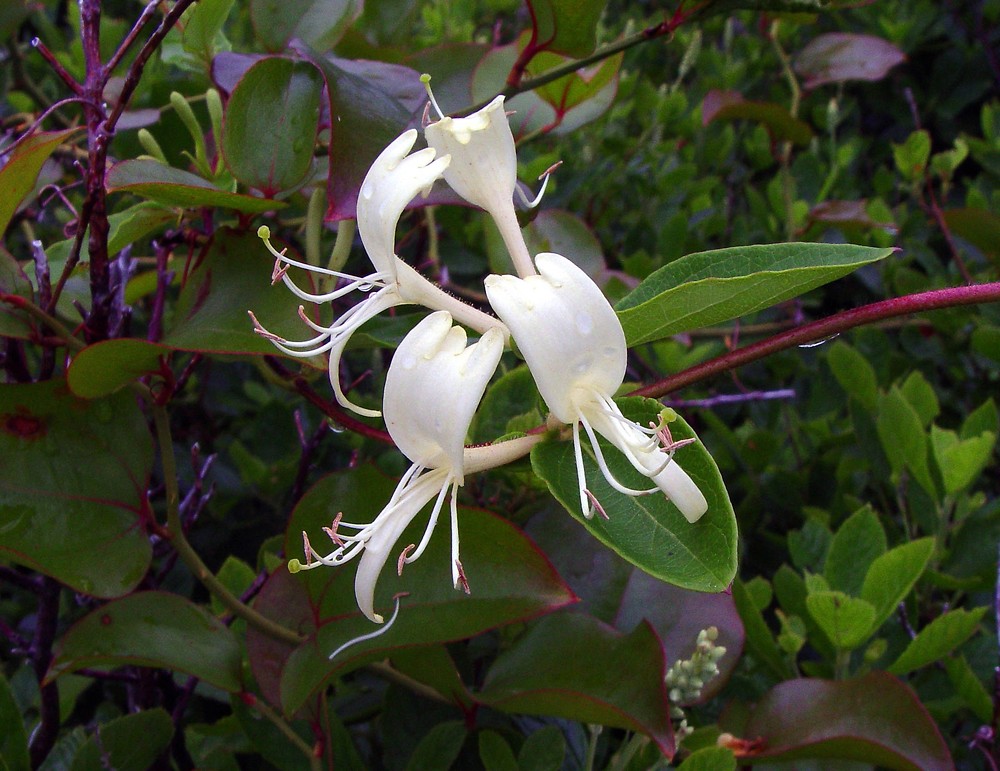
Japanese honeysuckle is a plant almost everyone knows. It is perhaps best known for its sweet-smelling flowers. They are white at first, turning yellow as they get older. It grows as a shrub or as a vine, growing up tree trunks or covering another shrub. As it gets older, it develops a thick, woody stem which is very strong and does not break easily.
As it climbs, it wraps itself around the tree and covers the tree’s branches with its own stems and leaves. If the tree can not get light to its leaves, or if the honeysuckle plant is soaking up all the water through its roots, the tree may die.
Japanese honeysuckle was brought here from Asia and has spread steadily. It is is usually seen on the edges of woods, streams, or roads. It also lives in fields and gardens. Japanese honeysuckle has three-inch leaves which are green and oval-shaped. They are opposite, which means two leaves grow as a pair from the same spot on the stem, but on opposite sides. Birds that consume the fruits and disperse the seed spread Japanese honeysuckle. However, this species is also capable of reproducing vegetatively by underground rhizomes, and aboveground runners. It also has the ability to develop a rather large seed bank after becoming established and seeds germinate after soil disturbance. Wide habitat adaptability, wide seed dispersal, rapid growth rate, extended growing season, and lack of natural enemies make Lonicera japonica a strong competitor against native species.
Management:
Manual: Hand-pulling, grubbing with a hoe or a shovel, and removal of trailing vines is practical for small infestations. Remove and destroy all plant material after cutting to prevent rooting and reinfestation. Periodic mowing can slow vegetative spread but may cause resprouting and increase stem density. Aggressive mechanical tillage is also effective, but may not be an option in many areas. However, soil disturbance may stimulate seed germination from the seed bank.
Chemical: Timing of application is critical to effective Japanese honeysuckle control. Many herbicide treatments reduce foliage but leave buds and roots undamaged that can produce new growth. A foliar application of 1.5 to 3% glyphosate or 3 to 5% triclopyr shortly after the first frost appears to be the most effective treatment.
Biological: Lonicera japonica has few natural enemies in North America. There are no known biological agents for Japanese honeysuckle. Deer may forage on the plant, but cause limited damage.
Commonly known as nandina, heavenly bamboo or sacred bamboo, is a suckering shrub in the Barberry family. Introduced in the early 1800s, nandina is native to eastern Asia from the Himalayas east to Japan. Though the plant is called bamboo, it is not actually related to the bamboo plant, which is a hardened grass rather than a mid-sized shrub.
Nandina is frequently used in landscaping for its green or reddish leaves. The varieties with green leaves produce bright red berries that will remain on the plant for many months. The seeds from these berries may travel in birds’ bellies or with rainwater to new locations where they can quickly form dense thickets, spreading by underground rhizomes and producing more plants.
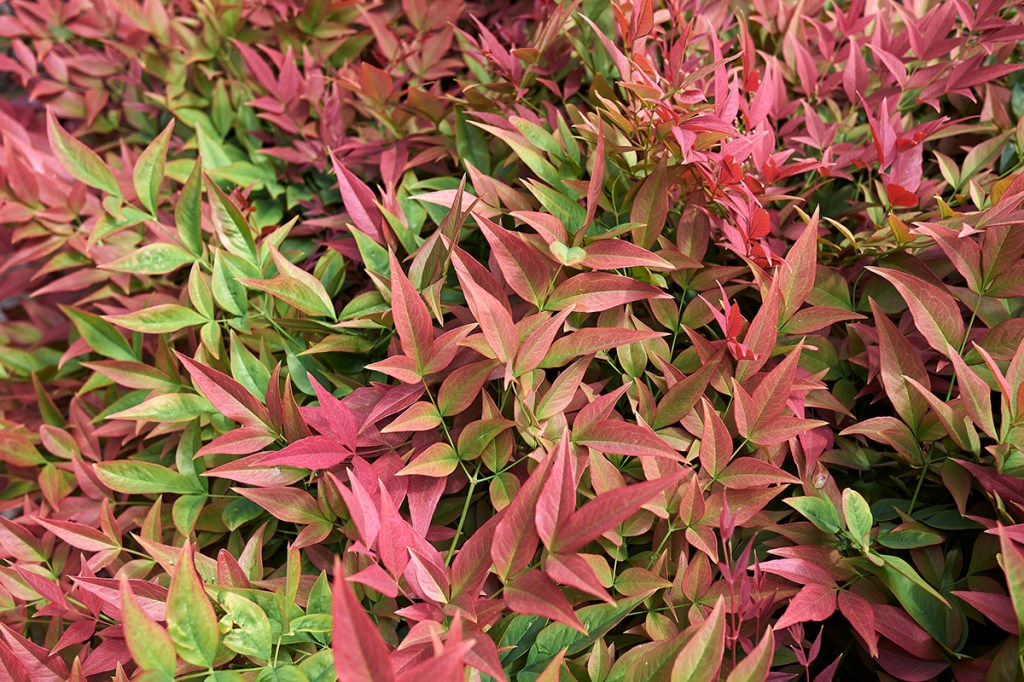
Nandina is considered invasive in North Carolina, Tennessee, Georgia and Florida. It has been placed on the Florida Exotic Pest Plant Council’s invasive list as a Category I species, the highest listing. Nandina has been observed invading open fields and wooded areas throughout North Carolinal. In general, the purchase or continued cultivation of these plants in the southeastern US is highly discouraged. Sacred bamboo foliage and fruit are poisonous to some animals. The foliage contains cyanogenic glycosides, which are poisonous to many animals. Even small amounts of foliage are hazardous to cattle and animals may become comatose 5 to 10 minutes after the first signs of poisoning appear. Sacred bamboo berries are toxic to dogs and cats and mildly toxic to humans.
Management: The first step in preventative control of nandina is to limit planting and remove existing plants within the landscape. If possible, removal should occur before seeds are produced. Since seeds remain on the plant for several months, care must be exercised to prevent seed spread and dispersal during the removal process. Chemical control can be accomplished by thoroughly wet all leaves with glyphosate herbicide as a 1-percent solution in water (4 ounces per 3-gallon mix) with a surfactant (August to October). Currently there are no known biological controls for heavenly bamboo.
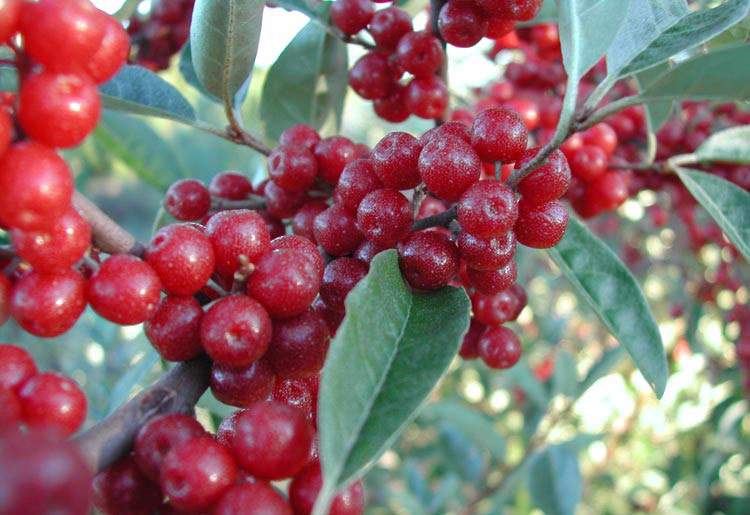
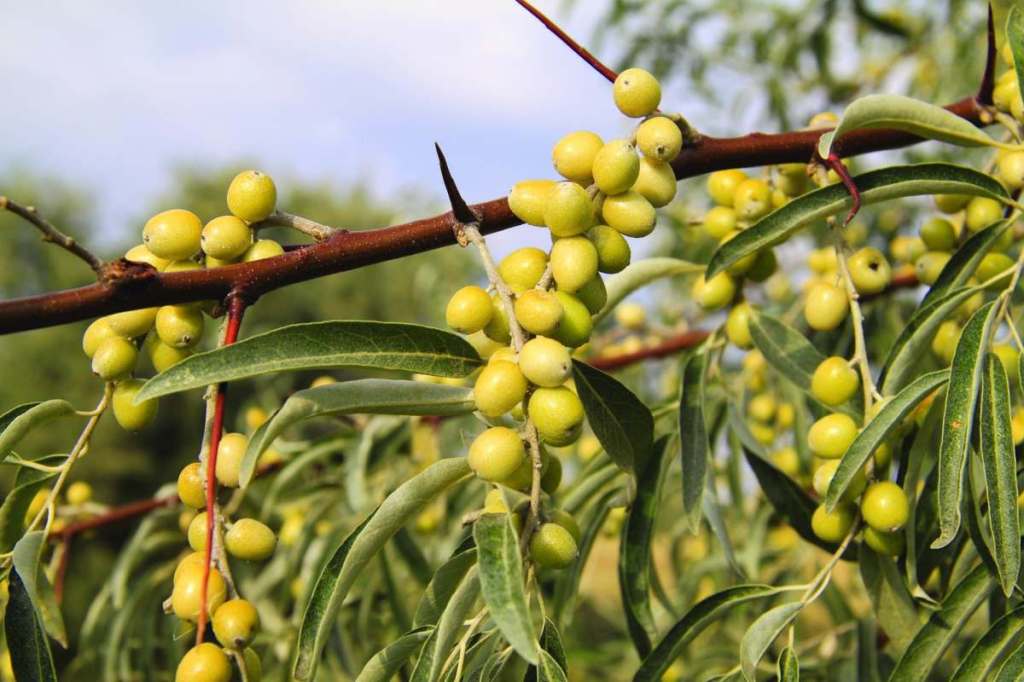
Autumn olive, also referred to as Japanese silverberry, umbellate oleaster or spreading oleaster, is native to eastern Astia from the Himalayas east to Japan.
Autumn and Russian olives are very similar in appearance and equally invasive. They are deciduous shrubs, or occassionally small trees, with a dense, thorny crown. They have a smooth bark and can grow to a height of 20 feet. The leaves have a wavy margin and are silvery because of numerous tiny scales when they leaf out early in spring. The leaves subsequently green up as the scales wear off through the summer on the Autumn olive. Russian olive leaves remain silvery until leaves drop in fall.
Flowers are clustered, fragrant, with a four-lobed pale yellowish-white bloom along the stem. Fruit, which is called a drupe, is a round and 1/4 to 1/3 inches long, silvery-scaled yellow ripening to red dotted with silver or brown coloring. Ripe fruit is juicy and edible. It is small but abundantly produced, tart-tasting, and has a chewable seed. These fruits have been shown to have about 10 times the amount of the antioxidant lycopene than tomatoes.
Autumn olive and Russian olive spread by seeds disseminated throughout the landscape by birds and other wildlife that eat them. The shrubs grow rapidly and out-compete native vegetation. Olives begin to produce fruit as early as 3 years of age, and have the ability to thrive in poor soil. It often invades riparian habitats where overstory cottonwood trees have died. Olive seedlings re-sprout vigorously after cutting or burning.
Hand pulling seedlings and sprouts is effective in the early spring when the ground is moist and the entire plant and roots can be removed. Other forms of control such as mowing and burning without the application of a herbicide usually contribute to a larger number of root sprouts. Systemic herbicides, such as Roundup (glyphosate), can be used effectively when applied to cut stumps or used as a foliar spray. There are currently no biological controls for either olive varieties.
Consider these native plants as alternatives: black-haw (Viburnum prunifolium), shadbush (Amelanchier arborea, A. laevis), clammy locust (Robinia viscosa), redbud (Cercis canadensis), New Jersey tea (Ceanothus americanus) and staghorn sumac (Rhus typhina).
Pretty, aren’t they? Unless they are in your yard… and then, how do you stop them? There are three species of privet that have invaded the southeast; Japanese privet (Ligustrum japonica), Chinese privet (Ligustrum sinense) and Common privet (Ligustrum vulgare). All are evergreen shrubs that may reach 30 feet in height. They have leathery, oblong leaves that terminate with a pointed tip. Many small, white, fragrant flowers appear in April to June. They are perhaps most distinctive in the fall alongside roadsides with their dark blue berries which are toxic to humans.
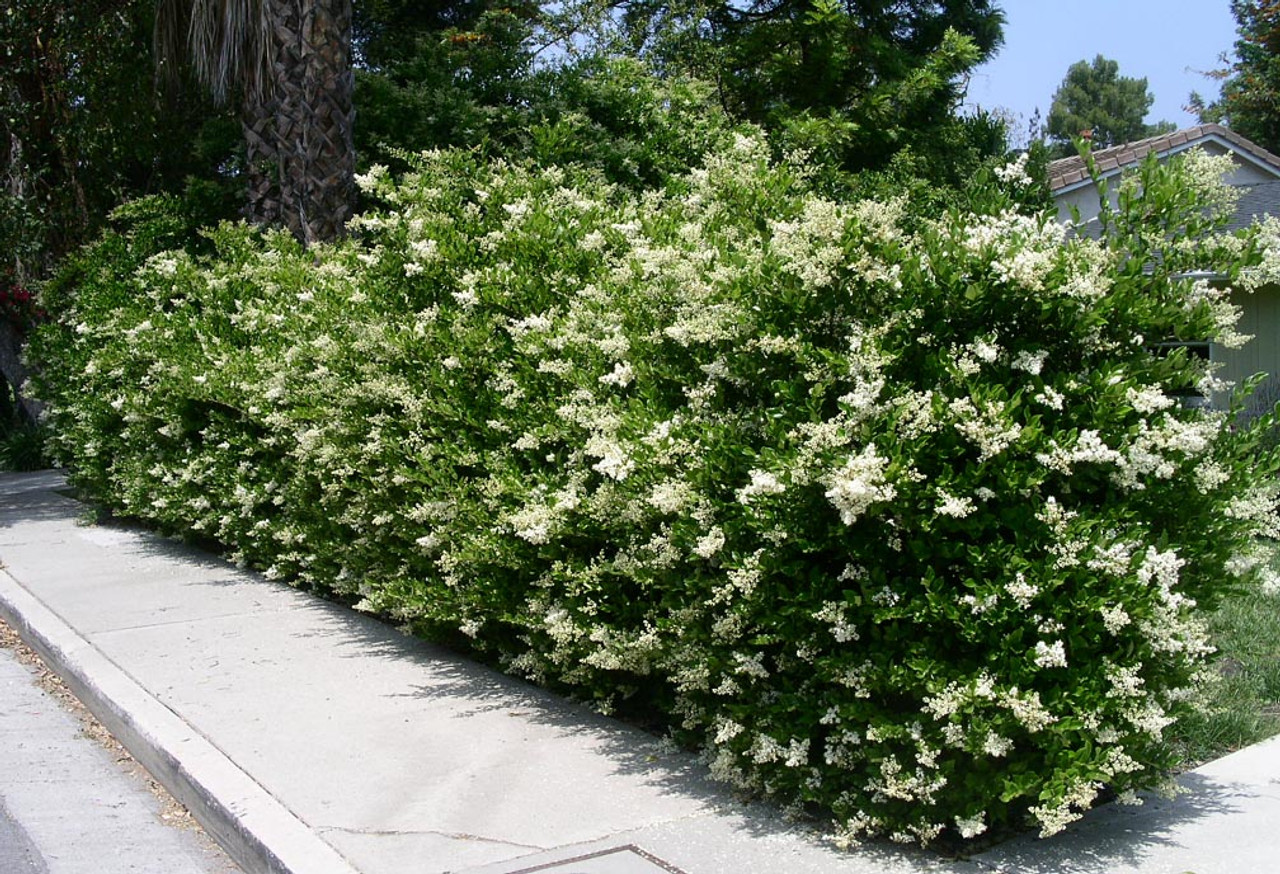
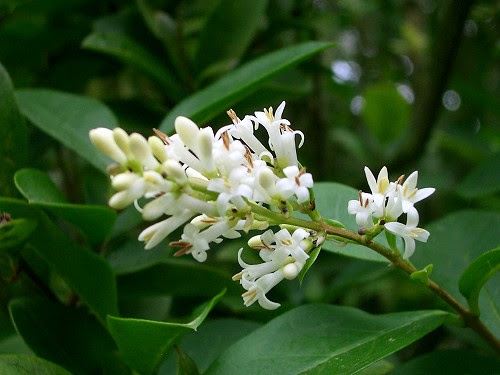
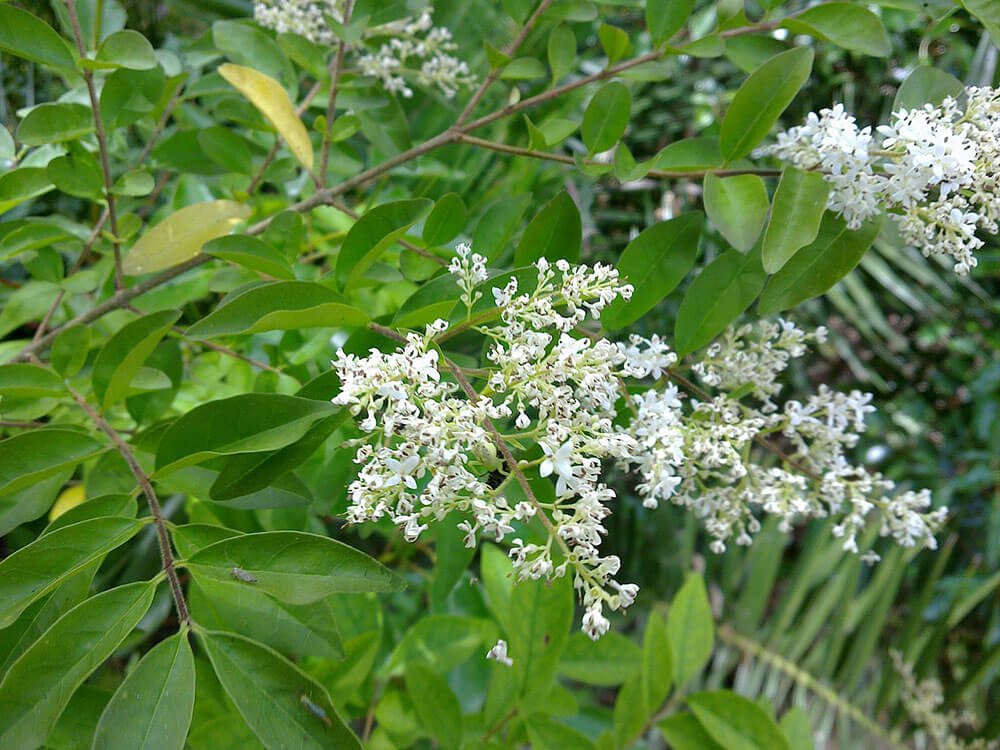
The stems can add 20 or more inches per year making them prolific growers. Once you are able to identify privet, you will notice it grows along almost every roadside. Privets persist on abandoned home sites and can readily invade abandoned lots and farmlands where they form impenetrable thickets. They are especially abundant along fencerows, streams, roadsides, and forest margins, and even have the ability to invade forests. Privets were introduced into the United States from Asia for ornamental planting, particularly for hedges. Having escaped from cultivation, they have now spread widely throughout the southeastern United States. The greatest threat is their ability to successfully compete with and displace native vegetation. The plants mature rapidly and are prolific seed producers. They also reproduce vegetatively by means of root suckers. Once established, they are difficult to eradicate because of their high reproductive capacity.
Management: Because privets are so invasive, aggressive management is key. Small shrubs can easily be pulled by hand. The larger ones should be cut near their base and an herbicide like Roundup applied to the cut area. For more information, go to http://plants.usda.gov/plantguide/pdf/pg_lisi.pdf.
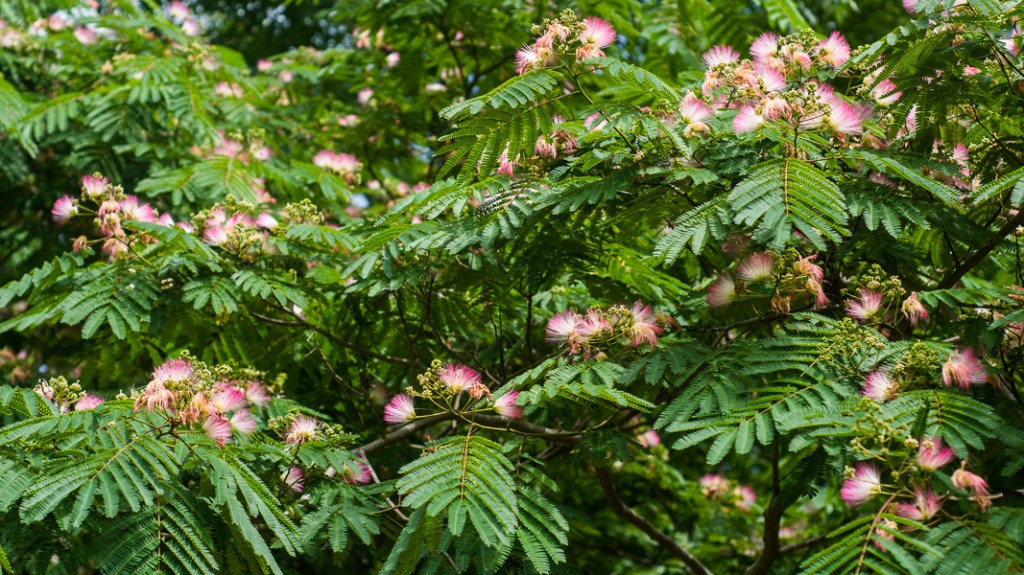
It certainly is pretty… and interesting. Unique in the landscape. It’s too bad there are more downsides to this invasive species. Originally from China, Mimosa or silk tree was introduced to the US in 1745 and cultivated since the 18th century primarily for use as an ornamental. It remains popular because of its freagrant and showy flowers. Due to its ability to grow and reproduce along roadways and disturbed areas, and its tendency to readily establish after escaping from cultivation, mimosa is considered an invasive plant in the U.S. This fast-growing, deciduous tree has a low branching, open, spreading habit and delicate, lacy, almost fern-like foliage. Fragrant, silky, pink puffy pompom blooms, two inches in diameter, appear in abundance from late April to early July, creating a spectacular sight. But the tree produces numerous seed pods and harbors insects (webworm) and disease problems (vascular wilt).
Mimosa reproduces both vegetatively and by seeds which have impermeable seed coats that allow them to remain dormant for many years. One study showed that 90% of the seeds were viable after five years, and for another species of mimosa, a third of its seeds germinated after 50 years in open storage. Seeds are mostly dispersed below or around the parent plant, but can be dispersed further by water. Silk trees grow rapidly under good conditions but are short-lived and have weak, brittle wood. If cut or top-killed, trees resprout quickly and sprouts can grow over three feet in a single season.
To manage this tree, cut off at ground level with power or manual saws. Cutting is most effective when trees have begun to flower. This will prevent seed production. Because mimosa spreads by suckering, resprouts are common after treatment. Cutting is the initial control measure. Complete removal will require either an herbicidal control or repeated cutting of resprouts. Systemic herbicides such as glyphosate and triclopyr can kill entire plants because the chemical travels through a plant from the leaves and stems to the actively growing roots, where they prevent further cell growth.
Japanese barberry is a dense, deciduous, spiny shrub that grows 2-6 ft high. The branches are br\own, deeply grooved, somewhat zig-zag in form and bear a single very sharp spine (thorn) at each node. The leaves are small, 1/2 to 1-1/2 inches long, oval shaped, green, bluish-green or dark reddish purple. Japanese barberry forms dense stands in natural habitats including canopy forests, open woodlands, wetlands, pastures and meadows. It can alter soil pH, nitrogen levels and biological activity in the soil. Once established, barberry displaces native plants and reduces wildlife habitat and forage. White tailed deer apparently avoid browsing barberry, preferring to feed on native plants, giving barberry a competitive advantage.
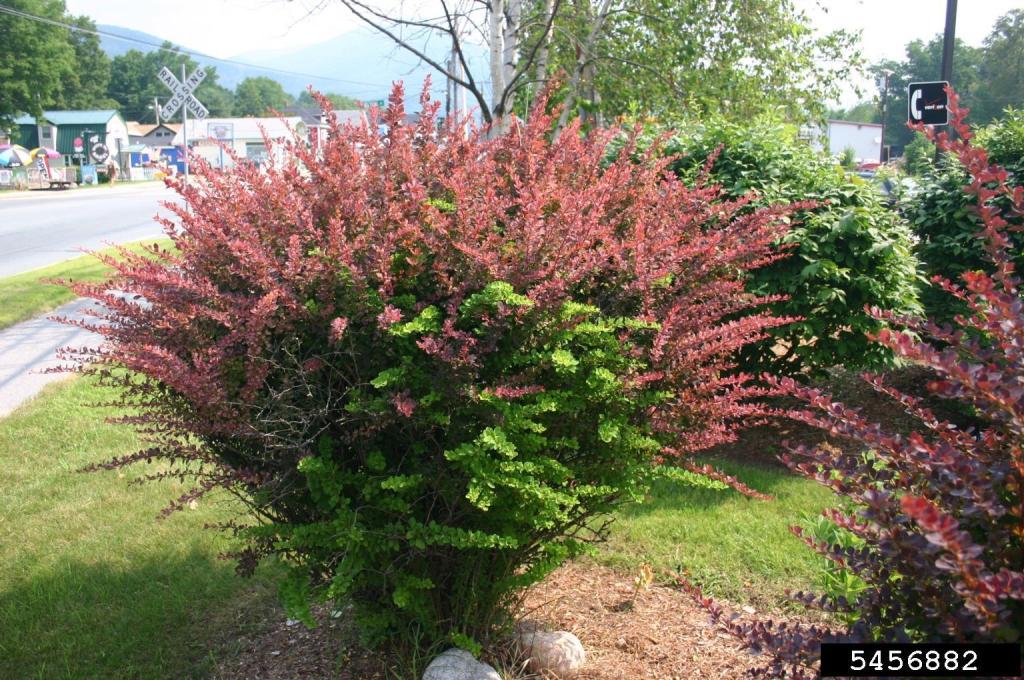
Japanese barberry is native to Asia. It was brought to North America in the late nineteenth century and has been widely planted as an ornamental. It has escaped and naturalized as far north as Nova Scotia, south to NC and west to Montana. The plant regenerates by seed and creeping roots. Birds and rabbits are known to eat the seeds and distribute the species. Branches root freely when they touch the ground, allowing single plants to become quite large. Japanese barberry competes poorly with grasses and may succumb to drought conditions.
Mechanical removal is recommended because it is effective and may cause the least disturbance. Barberry is one of the first plants to leaf out in spring and is therefore easy to distinguish from other shrubs. whole shrubs may be removed with a hoe or weed wrench. Use of thick or sturdy gloves is recommended to provide protection from the spines. Plants can resprout from roots, so remove as much of the roots as possible. Regular mowing can prevent barberry from returning once it has been removed. In areas where mechanical removal is not practical, such as rock piles or outcrops, a glyphosate herbicide can be used. Consult a licensed herbicide applicator before applying herbicides over large areas.

The latin name is Miscanthus sinensis. Introduced from eastern Asia as an ornamental grass. A perennial, that can grow to 10 feet in height with branches that spread or drop. A highly invasive species, it spreads primarily by underground roots or rhizomes. While it looks fabulous… it will take over quickly and is hard to get rid of.
Identification: Chinese Silvergrass is a bunched perennial grass reaching 5 to 10 feet in height. Leaves are alternate, 40 inches long, and pointed. The stem is stout and arching. The silver or pink flowers are branched and drooping, 4 to 15 inches long, and appear from August to November. The yellowish-brown seeds mature from September to January.
Ecology: Chinese Silvergrass invades roadsides, field edges, and disturbed sites. This invasive grass colonizes by wind dispersed seeds. It is highly flammable and may become a fire hazard. Few wildlife species use Chinese Silvergrass.
Plant Control: In the home landscape, Miscanthus clumps can be dug up and bagged in large heavy duty garbage bags so the clumps cannot root elsewhere and the seeds do not spread. If digging is not an option, spray actively growing clumps with a 2% solution of glyphosate and surfactant. Cut off and bag up any seed heads to control spread. Re-treat as needed until clump is dead. Monitor for seedlings and dig up when found.
http://www.ncsu.edu/goingnative/howto/mapping/invexse/chineses.html
 Marshall Native Gardens