Bird-Friendly Plants
MNGI has collaborated with the local Audubon Society and NC Arboretum to effectively design this educational garden. Our sponsors and champion for this garden is the Rotary Club of Madison County.
Please note that water, food, and shelter are included in this bird friendly garden where you can watch, enjoy, and learn about plants that attract birds.
This is a partial list of the plants in our bird garden. All photos courtesy of the North Carolina Native Plant Society (see their gallery) and the North Carolina Extension Gardener Plant Toolbox.
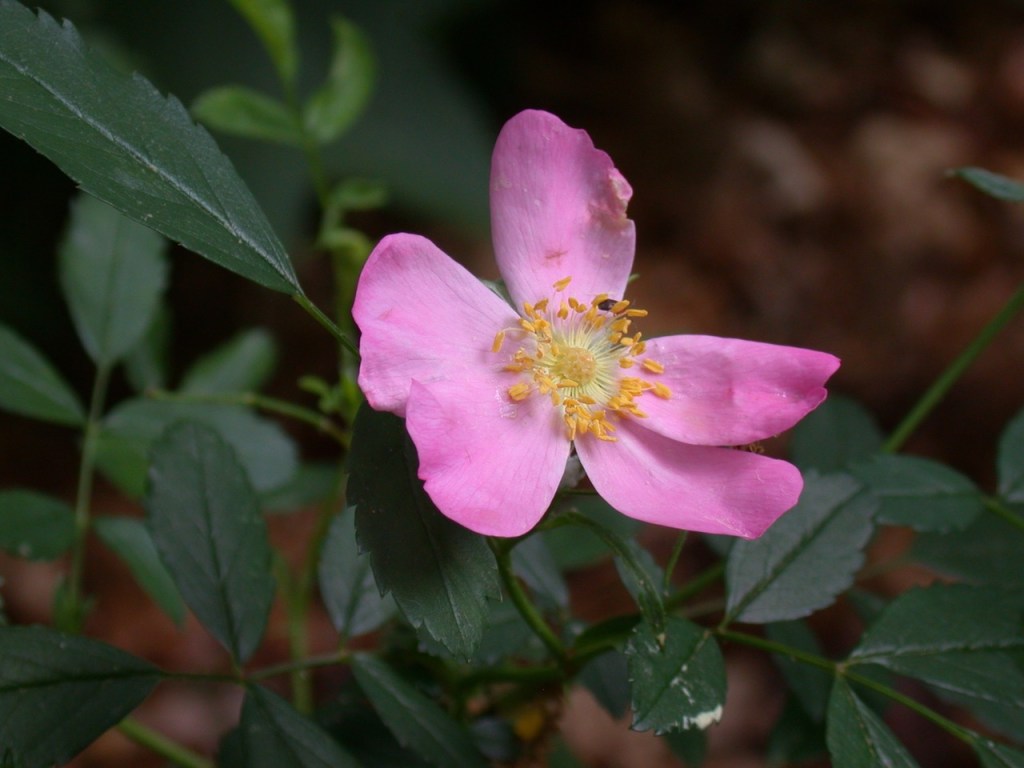
Carolina Rose (Rosa carolina)
Best grown in average, medium to wet, well-drained soil in full sun. Water deeply and regularly but avoid overhead watering. Needs good air circulation to promote vigorous growth and help control foliar disease. Prune in late winter to early spring.
Grows from 1-3′ tall and often spreads by suckers to form colonies or thickets in the wild. Features single 5-petaled, pink flowers in May. No repeat bloom. Smooth, dark green foliage. Red hips in late summer.

St. Johns Wort ‘Sunburst’ (Hypericum
prolificum)
Small, dense, upright, mounded deciduous shrub noted for its showy yellow flowers in June-July. Grow in average, medium, well-drained soils in full sun to part shade. Prefers rich, sandy loams. Tolerant of some drought. Mulch roots in winter.
Flowers bloom on new wood. Flowers give way to reddish-brown narrow ovoid fruit capsules that ripen in September. Attractive exfoliating reddish-brown bark develops on mature stems.
This cultivar features slightly larger flowers on a more compact plant growing to 3′ tall.
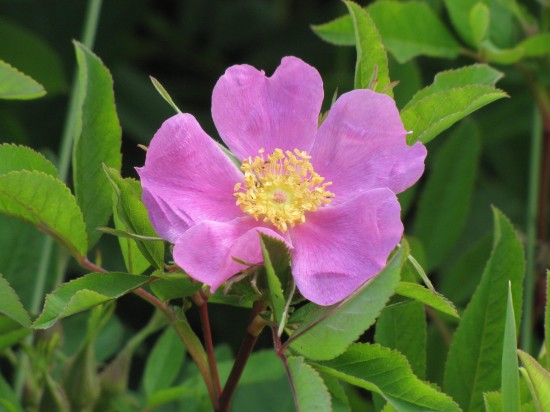
Swamp Rose (Rosa palustris)
Multi-branched perennial shrub growing up to 7 ft tall, with graceful arcing branches. The flowers are light pink and solitary or a few in a cluster.
It grows best in slightly acidic, wet to moist soils in part shade or full sunlight.
Extremely fragrant and the blooms last for 6-8 weeks, generally June through July. The fruit (rose hip) is red with a mass of seeds inside the hip. The hips are eaten and spread by birds.
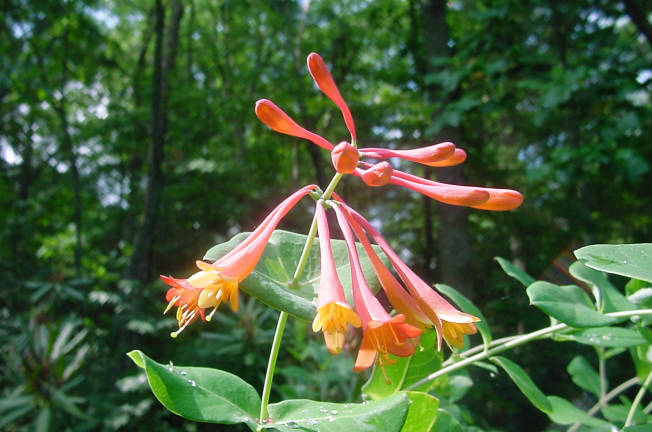
Major Wheeler Honeysuckle Vine (Lonicera sempervirens)
6′ x 10′ wide fast growing, but non aggressive, vine. Most profuse bloomer of the honeysuckle varieties. Mass of thin tubular, red-orange flowers from late spring through the end of summer. Highly disease resistant foliage. Low maintenance. Attracts hummingbirds. Needs trellis, pergola or other support. Partially evergreen in southern climates, deciduous in colder zones of the north. Because this blooms on old and new wood, there is no need to prune other than to shape the vine once blooms have passed.
Crown of plant should rest just at or above the soil surface after watering in. Grows in average soils. Tolerant of some shade.
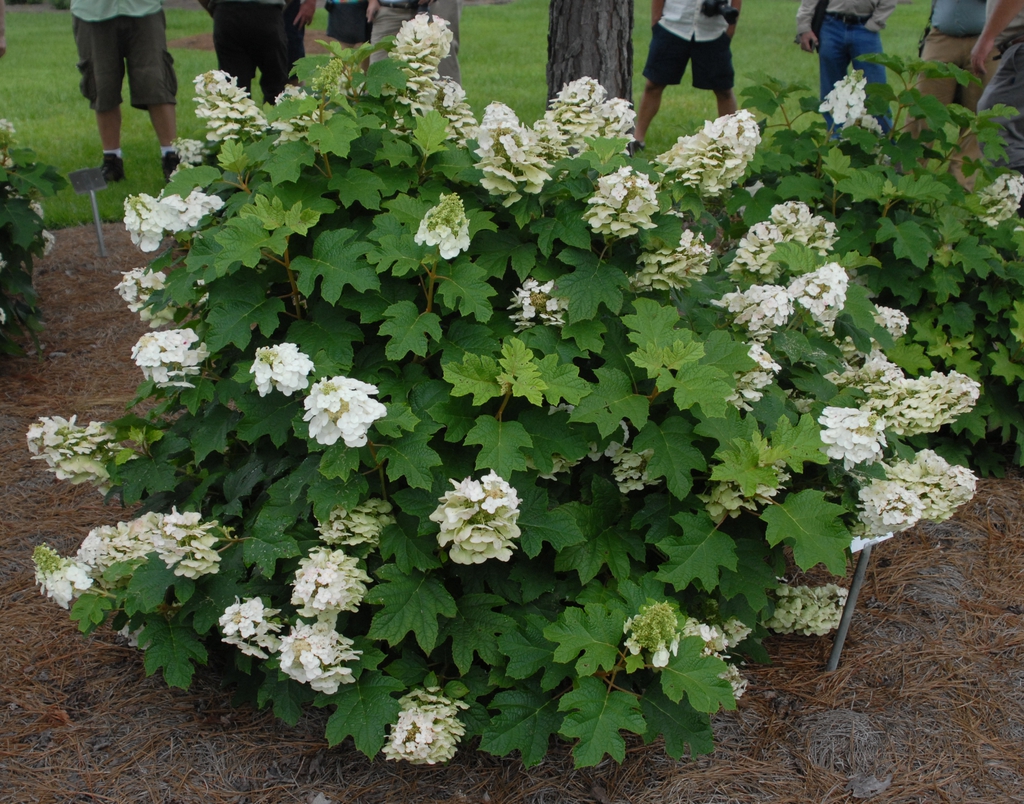
Dwarf Oakleaf Hydrangea ‘Ruby Slippers’ (Hydrangea quercifolia)
Small, deciduous, rounded shrub with dark green, deeply lobed foliage in summer; mahogany-red in fall. In early summer, ‘Ruby Slippers’ is covered with 9 inch long inflorescences that are held upright above the foliage. Flowers open white, but quickly turn pale pink and then deepen to rose. Full sun to partial shade. Needs sun for best flowering.
Grows 3.5′ tall x 5 ‘wide at 7 years. Well-drained, moisture-retentive soils, enriched with organic matter. Also does well in dry soils. Use mulch to keep its shallow roots cool.
Oakleaf hydrangeas bloom on last year’s growth, so prune them minimally after they bloom—not in early spring, when you’ll be removing flower buds.
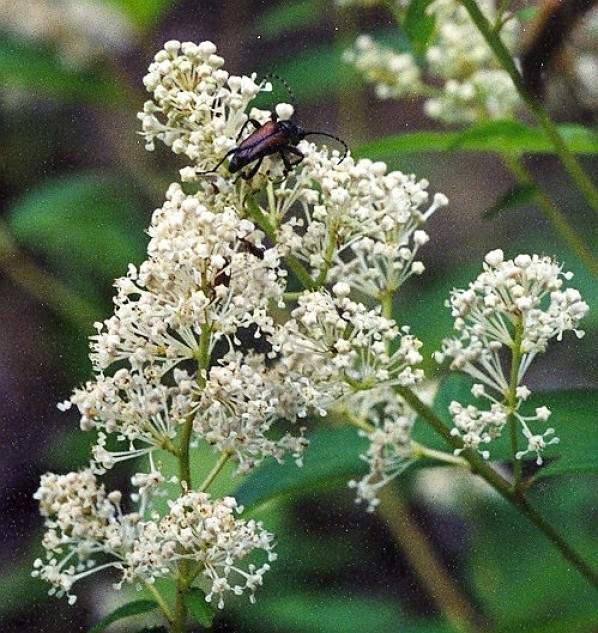
New Jersey Tea (Ceanothus americanus)
Native fragrant, perennial shrub, growing about 3′ tall. Nitrogen fixing shrub. White tip cluster blooms last about a month during early summer. Prefers full or part sun and average to slightly dry conditions. Good drought resistance once established.
Caterpillars of several moths, azure butterflies and skippers feed on the foliage.
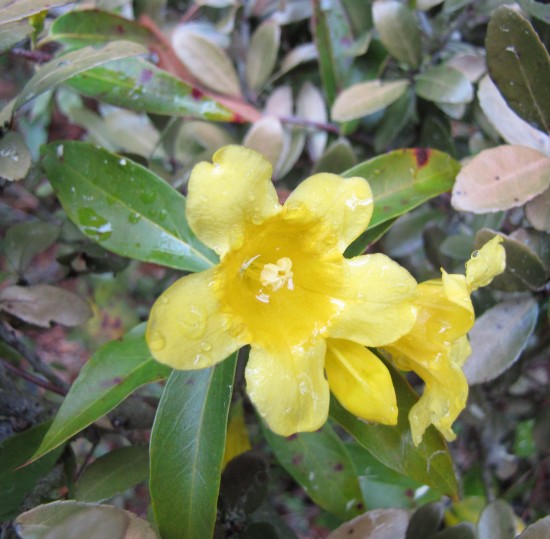
Carolina Jessamine (Gelsemium sempervirens)
Carolina jessamine grows to 20′ or more as a vine. It can also be grown as a ground cover, maintained with a yearly cutting in late spring after flowering to 3 ft or less.
Sweetly scented, golden yellow flowers cover the cascading, with shiny evergreen leaves from February to April.
Prefers full sun but tolerates part shade but grows slower and may become leggy. Grows best in fertile organically rich, well draining soil.
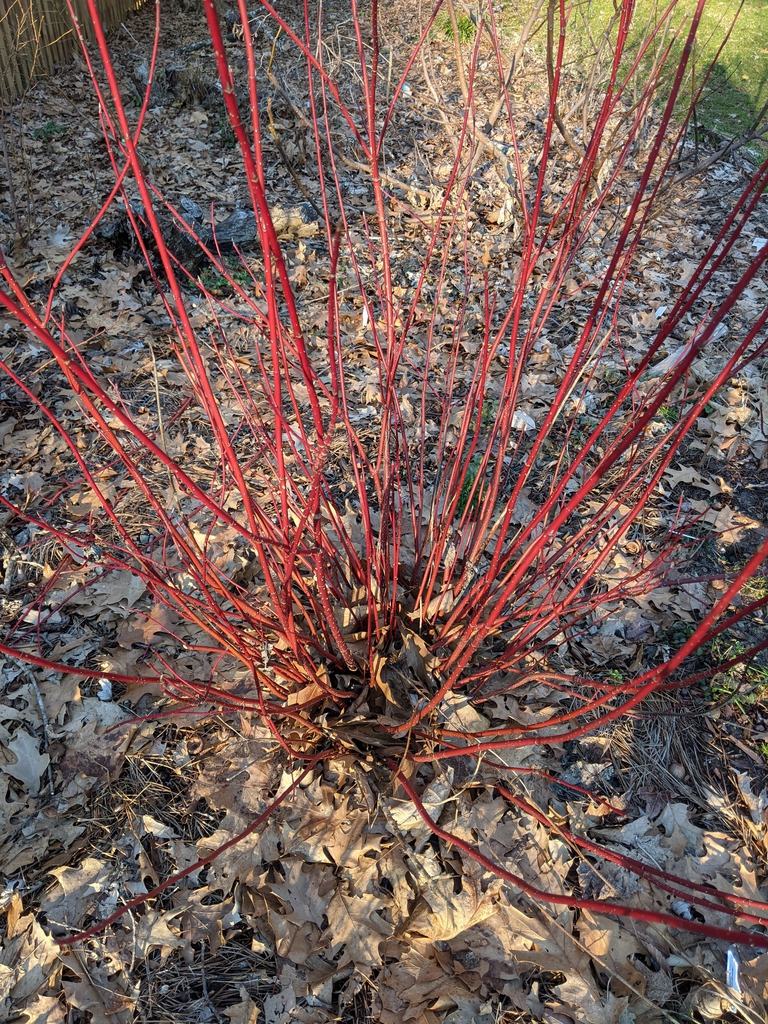
Red Twig Dogwood (Cornus sericea)
Dwarf, deciduous shrub with bright green leaves and masses of white flowers in May to June. Ht: 2- 3′ and 3′ wide. Striking red stems in winter. Moderate to fast growth rate. Full to part sun. Adaptable but prefers moist, well drained soil.
Foliage turns a bronze to purplish color in fall. After leaves are shed the plant retains its striking red twigs during winter. Young twigs have best winter color. Prune out old woody stems to rejuvenate shrub for better winter color.
 Marshall Native Gardens